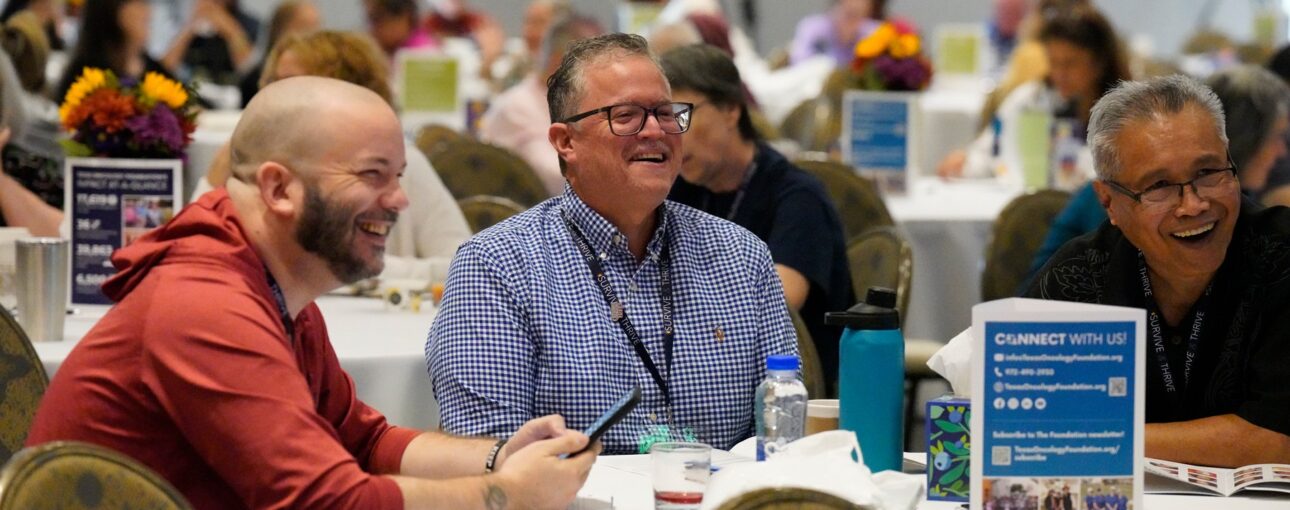

Survive & Thrive Conference 2025
November 14-16

Celebrate Life5K – Denton
October 18
Uncork to Support – San Antonio
November 7

*For caregivers only
First and Third Thursdays
10:00 am-11:00 am CT
October 2 Register
October 16 Register

October 1 Register
October 15 Register

HYBRID CANCER SUPPORT GROUP
Open to anyone who is impacted by cancer, including cancer patients, survivors, caregivers, and health professionals in a safe space to explore the cancer realm.
First Working Mondays
6:00 pm-7:00 pm CT
Online or in person at Texas Oncology–Paris, 3550 NE Loop 286, Paris, TX


The stages of survivorship series continues in this issue. You can catch up with Part I: What Survivorship Means; Part II: Survivors in Treatment; Part III: Survivors Who Recently Completed Treatment
Living cancer-free for several years marks a powerful chapter in the survivorship journey. It can bring a deep sense of gratitude and a renewed appreciation for everyday life. At the same time, this stage of survivorship may still come with unique emotional and physical experiences. Some long-term survivors continue to manage lingering side effects, such as fatigue, neuropathy, or changes in mobility. Worry about recurrence may also resurface, especially around follow-up visits. These feelings are natural and part of the survivorship experience.
This is often the time to shift focus from recovery to long-term wellness. Staying on top of follow-up care with your oncology team and primary care provider is key. Specialists like rehabilitation therapists can support mobility and strength, while nutritionists can guide you toward eating patterns that promote energy and health. Mental health professionals, including therapists or social workers, can help process anxiety and support emotional well-being. Peer support groups – both in person and online – offer connection with others who understand.
Daily practices also matter: keeping active, managing stress, maintaining a balanced diet, and making time for joy and purpose. Some survivors also choose to mentor others, volunteer, or advocate for cancer awareness, finding meaning in giving back.
Your survivorship path is still uniquely yours. Whether you’re pursuing new goals, cherishing everyday moments, or building healthier habits, this stage is about living fully while honoring how far you’ve come.
In our final edition of this series, we’ll explore survivorship for those living with chronic cancer and what it means to find joy, purpose, and stability while still in ongoing treatment.